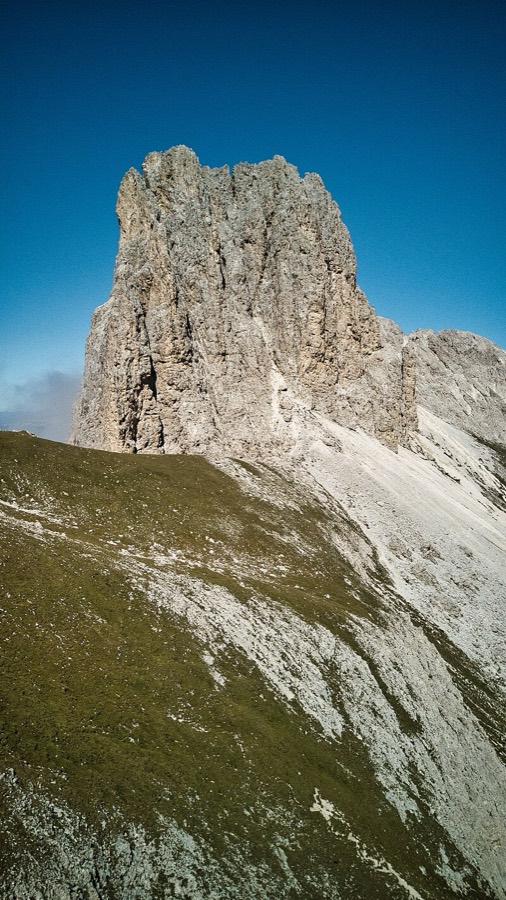
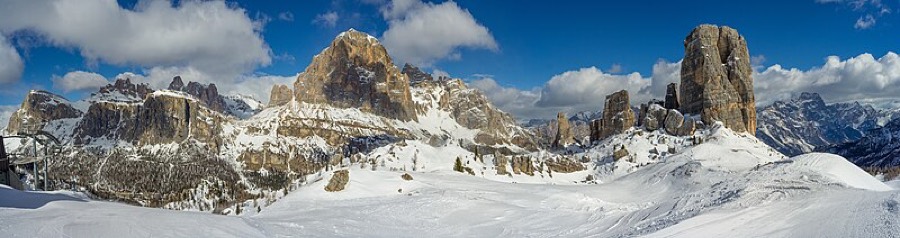
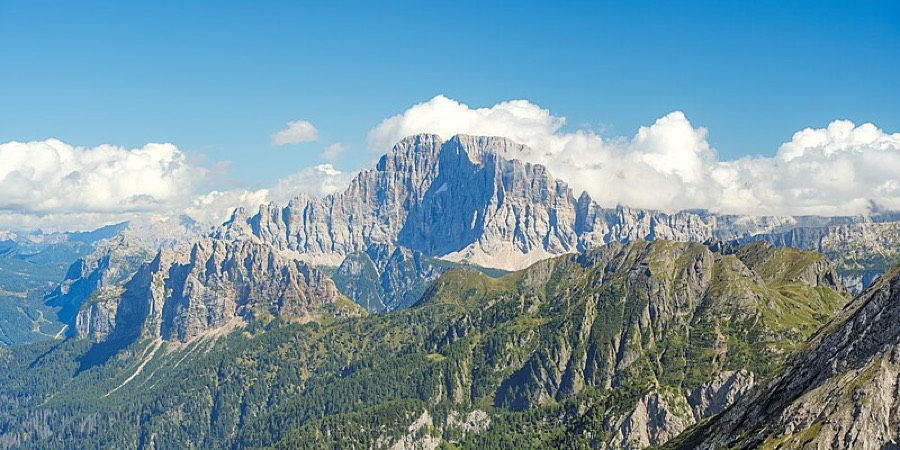
At dusk the walls above you turn red. Not a little, the whole massif blazes rose-pink, as though someone lit a fire beneath the rock. Locals call it enrosadira. Legend says a pink garden once bloomed here, tended by King Laurin, a dwarf lord who cursed it in anger, may human eyes never see it by day or night. But he forgot about dusk. And so Rosengarten still violates its own curse for a few minutes each evening.
That is why it is called Rosengarten in German, rose garden. In Italian, Catinaccio. Either way, this is one of the Dolomites' most photogenic corners, and Rosengarten Traverse guides you through it from start to finish: 40 km, roughly 3,500 m of climbing, 3 to 5 days depending on pace. It starts on expansive Seiser Alm (Alpe di Siusi), Europe's largest alpine meadow, and ends down in Val di Fassa. In between you cross the heart of the Catinaccio-Schlern group, a nature park that is part of UNESCO Dolomite heritage.
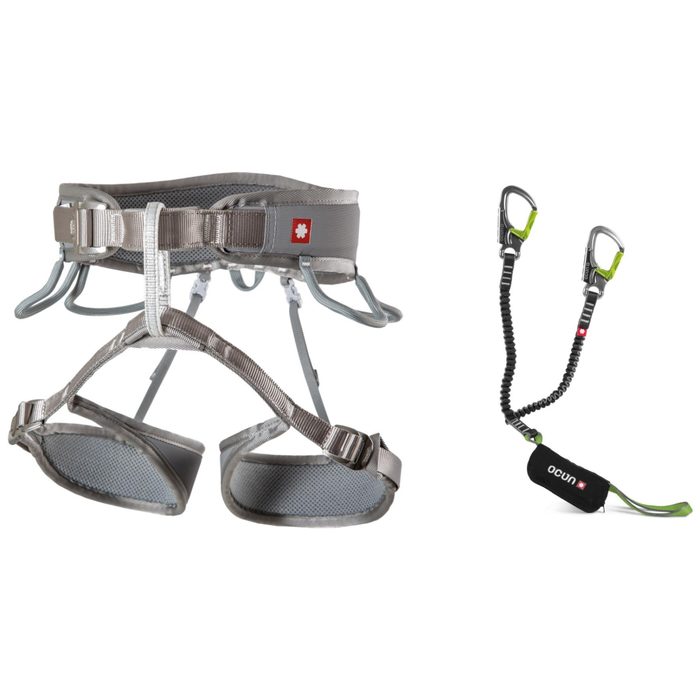
Terrain character? Jagged limestone towers, stony passes, grassy balconies, and a few sections where you grip rope. Difficulty is moderately demanding, not a high alpine extreme, but a proper ridge walk needing fitness and a sure foot. The key point of day one is Santner Pass (2,734 m). Via it runs Santner's via ferrata, a section of secured climbing for which you need helmet, harness, and abseil device. Those not keen on rope can bypass it on foot via Tschagerjoch (Passo delle Coronelle). Here you first stand face to face with the Vajolet towers.
And those are worth the entire trip. Torri del Vajolet, ten rock spires and towers that jut skyward like organ pipes. Torre Winkler was first climbed by eighteen-year-old Georg Winkler in 1887, free solo up and down, with no rope, no protection. Today the Vajolet towers rank among the most-climbed peaks in the entire Dolomites, beneath their base on the Gartlhütte balcony, you find as many climbers and hikers as you see nowhere else.
Stages and huts: day one leads you across Seiser Alm to Tierser Alpl hut (Rifugio Alpe di Tires), recognisable from kilometres away by its red roof. Built by mountain farmer Max Aichner, his dream came true in 1963, and it stands exactly at the crossroads of trails between Val di Fassa, Tierser Tal, and Seiser Alm, below the jagged peaks Rosszähne (Denti di Terrarossa). Inside you are greeted by the sound of an espresso machine and a hut running on wind and sun. Day two takes you beneath the towers, over passes Grasleitenpass (Passo Principe) and Molignonpass, down to Vajolet hut (Rifugio Vajolet), which has stood here since the late 19th century. The final stage descends around the towers to Gardeccia hut and on into the Fassa valley.
For whom? For capable trekkers handling a long mountain day and comfortable with a few metres of cable beneath your fingers. Families with experienced children manage the foot variants without via ferrata. When? Huts run roughly mid-June through mid-October, outside this frame it is closed and snow blocks high areas.
How to book? Each hut separately, directly with it, and ideally several months ahead, the Vajolet towers draw crowds and beds vanish fast. Confirm your reservation, expect dinner and breakfast at the hut, and carry cash; signal in the mountains is a matter of opinion.
Rosengarten Traverse is not the longest Dolomite trek. Nor the wildest. But few leave you standing under a rock that, at your command, turns red, then reminds you that King Laurin forgot about dusk on purpose.
Pick a start date, for every night on the route you instantly see the free beds and book directly through the official Alpenverein system.




 AT
AT DE
DE CH
CH EN
EN FR
FR IT
IT NL
NL SL
SL SK
SK CZ
CZ