Two thousand nine hundred sixty-two metres. Germany's highest point. And you're not reaching it by cable car with crowds in shorts, but on your own two feet, three days, two valleys, one summit.
Zugspitze Drei-Tages-Tour isn't a summit dash. It's a circuit showing you the mountain from both sides: up the gentle Reintal, down the wild Höllental. Start and finish in Garmisch-Partenkirchen, in between 22 km and roughly 2,200 m of climbing. That's not quite two climbs of Ben Nevis in your legs, just with a pack, over a glacier and above two thousand metres.
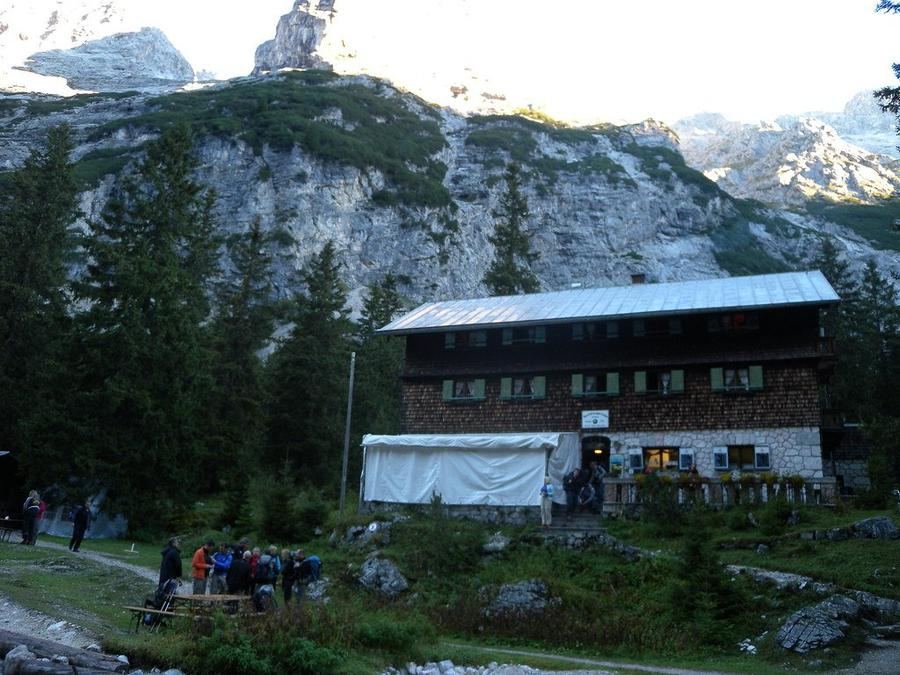
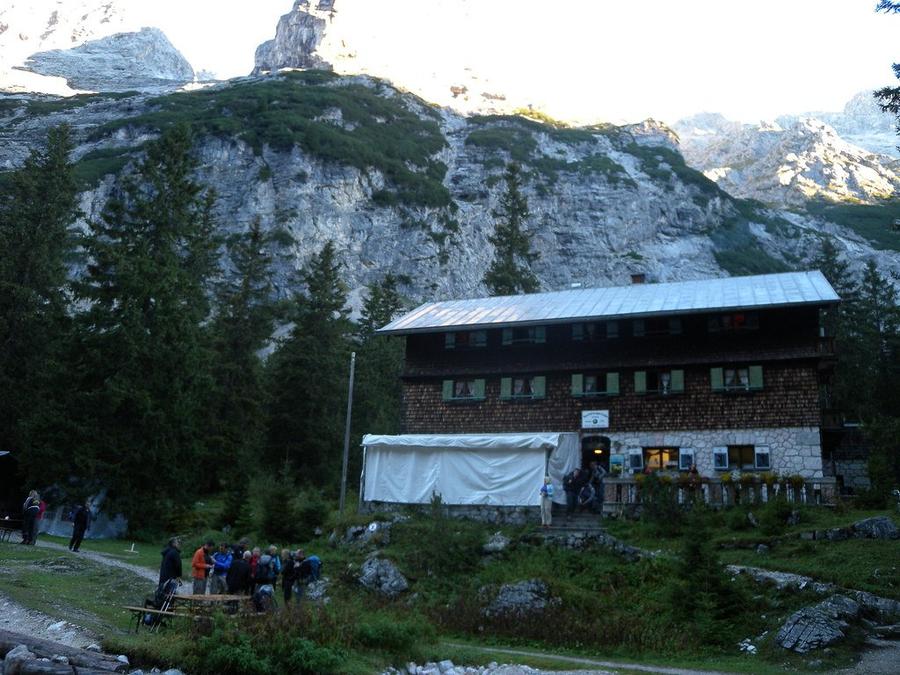
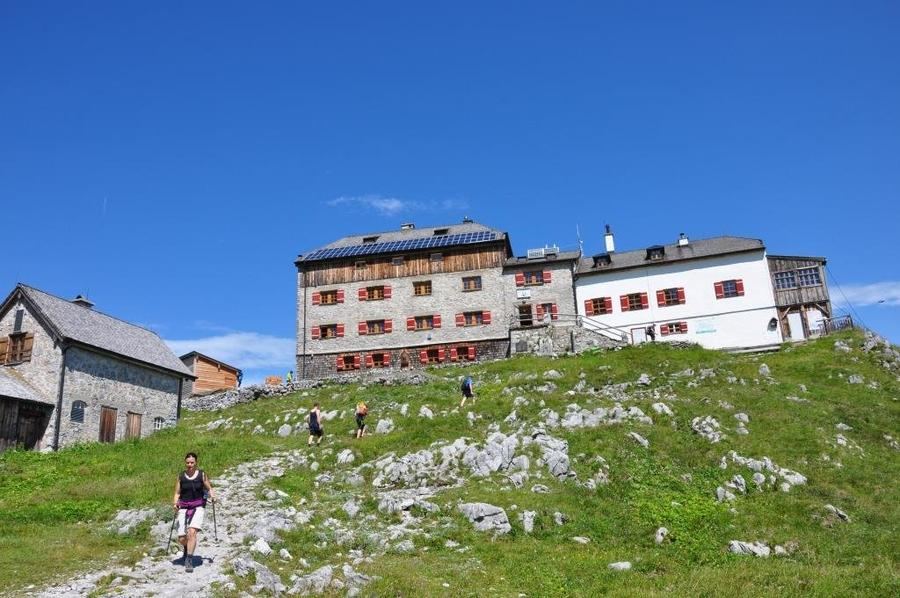
Day one belongs to water. From Garmisch you enter the Partnachklamm, a gorge 702 m long and in places 80 m deep, which the Partnach river carved into Triassic limestone. Since 1912 it's been a protected natural monument and you pass through galleries cut into the stone, the river thundering a few metres beneath you. Then the Reintal valley opens and leads you gently upward to Reintalangerhütte (1,369 m). A hut from 1912, heritage-protected, run by the Alpenverein München & Oberland section, sitting by crystalline Partnach beneath Wetterstein walls. Family-style, cozy.
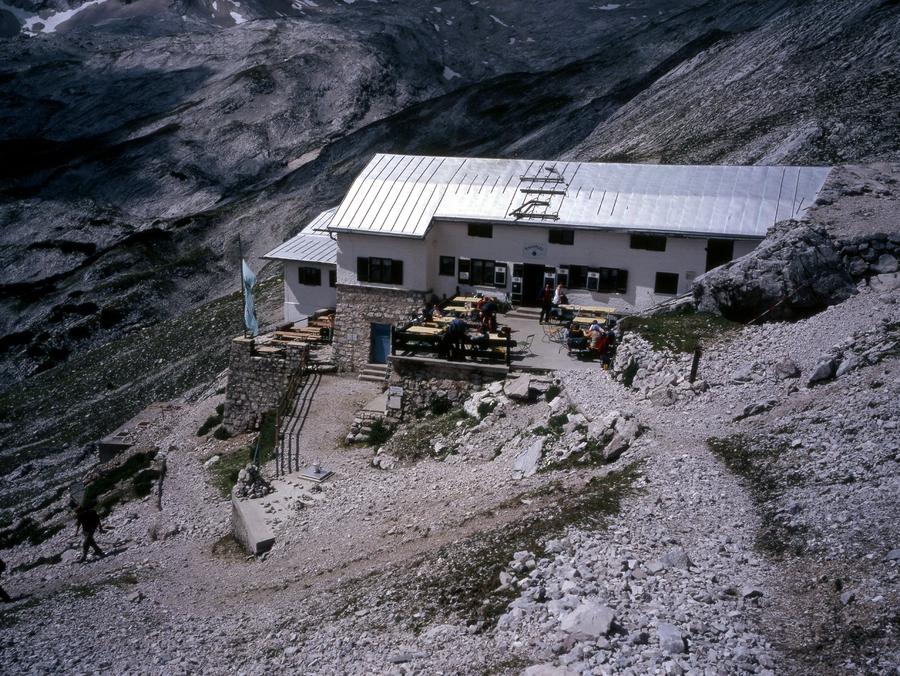
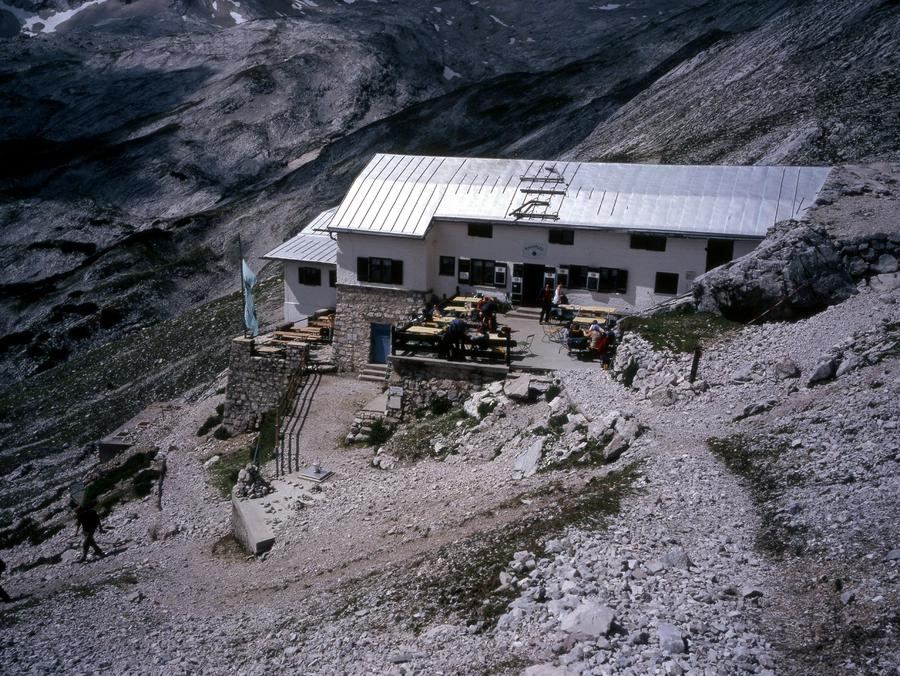
Day two is effort and reward combined. From Reintalanger you climb to Zugspitzplatt, a stone plateau beneath the summit, to reach Knorrhütte (2,052 m). This is the Munich section's oldest hut, built as far back as 1855; merchant Angelo Knorr contributed to construction and the hut bears his name. Since the first ascenders, Knorrhütte has been the base for the "normal route" over Reintal, technically the easiest way up Zugspitze. Above the hut you can already spot Schneeferner, the last remnant of a glacier that once covered the entire plateau.
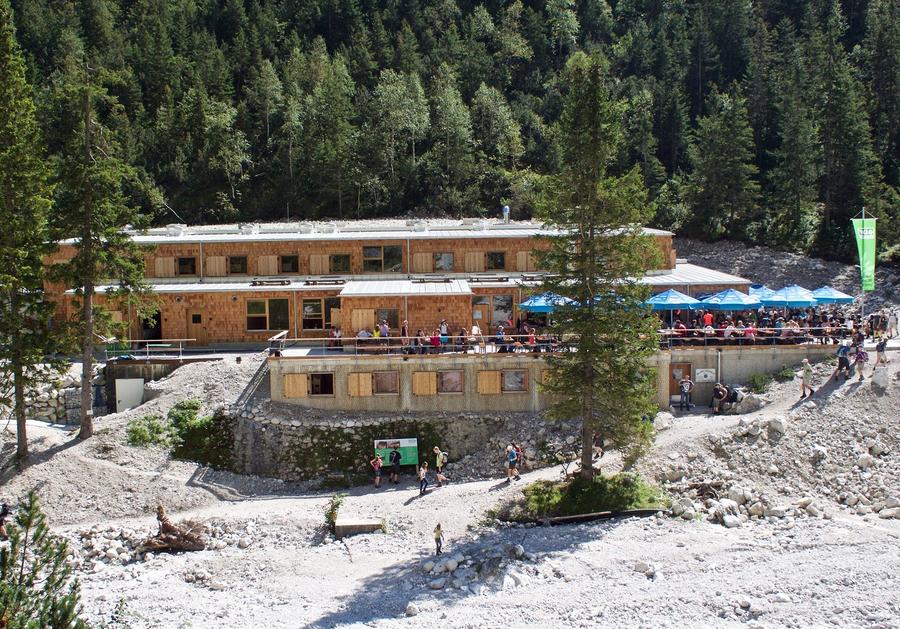
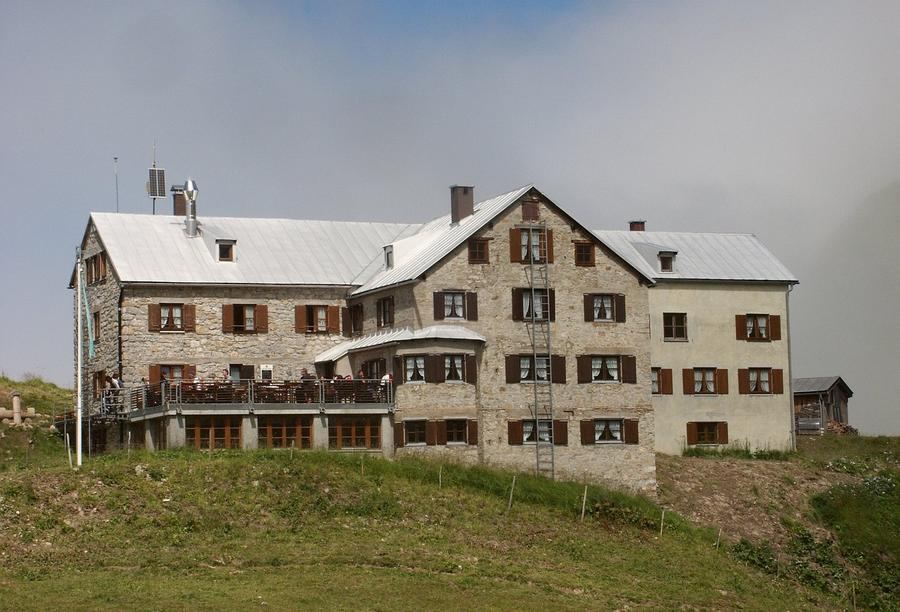
Day three is the payoff, literally. Over Zugspitzplatt and secured passages you reach the summit at 2,962 m. Cross, crowds from the cable car, and the Alps spreading in all directions below. Then comes the mountain's second face: descent into Höllental. Here the walk ends. Höllental is Zugspitze's dramatic flank, Höllentalferner (one of Germany's last glaciers), the secured Höllental-Klettersteig and the gorge Höllentalklamm. The route leads to Höllentalangerhütte (1,387 m), the area's most modern hut. The original hut stood there from 1893/94, its historic log structure now lives in Munich's Alpine Museum. The new building from 2015 sparked debate with its futuristic look; judge for yourself.
Who's it for: for fit hikers with good stamina who can handle three days of elevation gain and aren't scared of exposed, secured terrain on the Höllental side. Up the Reintal side families with children from age ten manage it. Down the Höllental side needs sure feet, good judgment and glacier-and-via-ferrata experience. Anyone who can't do Höllental descends the same way back down Reintal, the mountain doesn't mind.
When to go: season starts late June and runs through early October. Before then the plateau and Höllental hold snow and Höllentalferner is tricky. Ideal is July and August when huts run full and the glacier is most navigable.
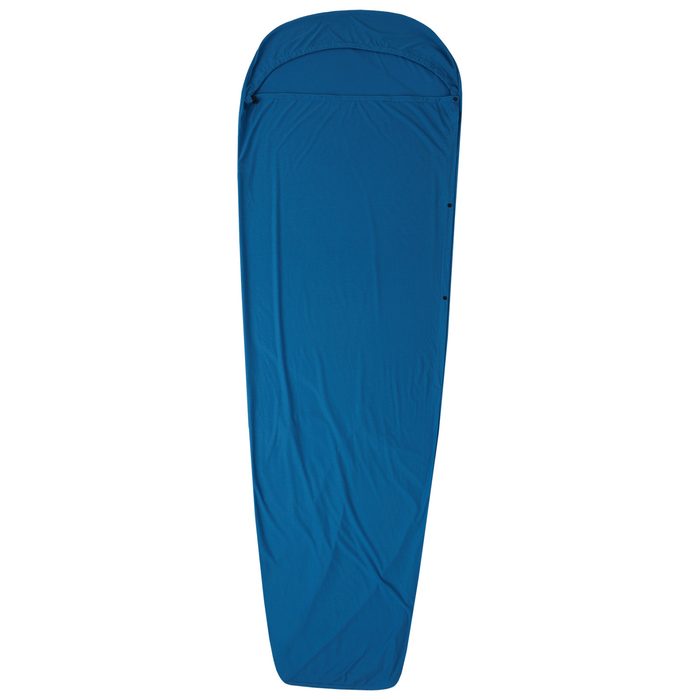
How to book: beds at Reintalangerhütte, Knorrhütte and Höllentalangerhütte book ahead online through Alpenverein München & Oberland. You pay cash on site; credit card just holds the reservation. A hut sleeping bag is mandatory. In high season book well ahead, Zugspitze draws.
Three days. Two valleys. One mountain you'll know from both the face and the back. Upward it lets you go easy; downward it asks for respect. And on the summit, among the cable car crowds, you'll be the only one who truly walked the 2,962 metres.
Pick a start date, for every night on the route you instantly see the free beds and book directly through the official Alpenverein system.



 AT
AT DE
DE CH
CH EN
EN FR
FR IT
IT NL
NL SL
SL SK
SK CZ
CZ