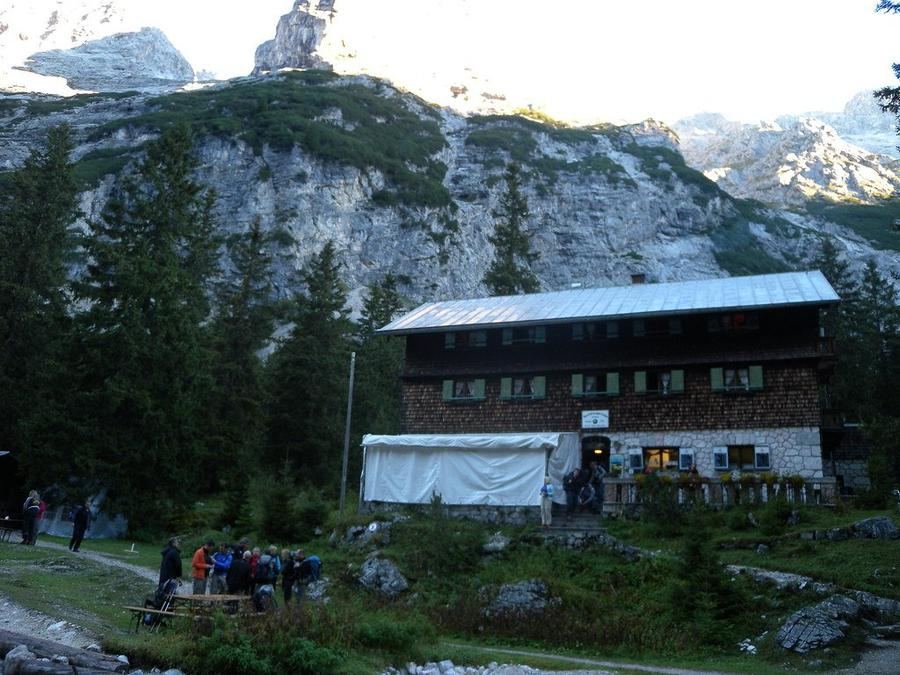
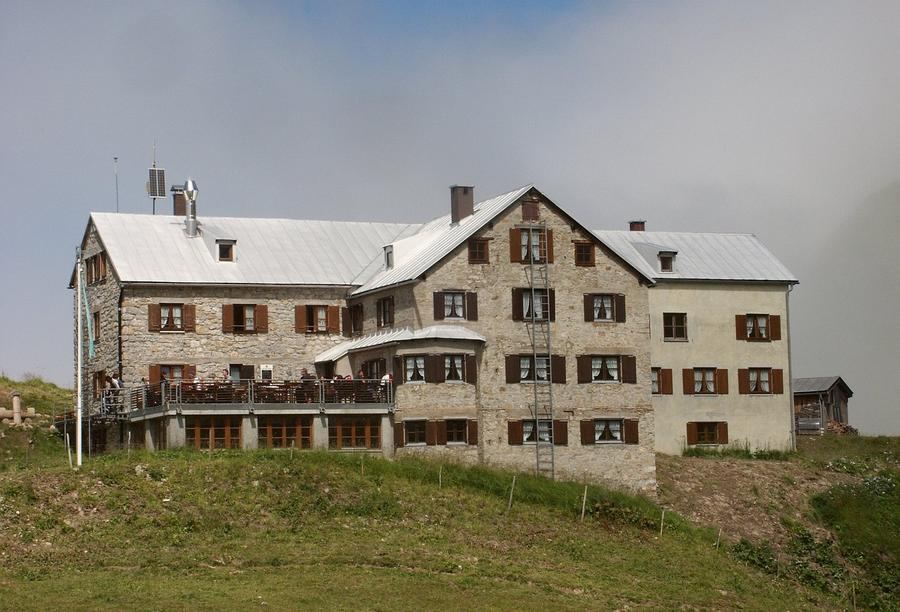
Above Königssee stands a stone king. According to legend a cruel ruler; his own pack tore him into a chasm, and he froze to stone. Beside him a woman, around seven children. So the legend says Watzmann was born, 2,713 metres high, ruler of the Berchtesgaden Alps. And you'll circle him in four days.
Watzmann-Umrundung isn't a summit push. It's a circuit around the massif, 53 kilometres and nearly 4,000 metres of climbing, three alpine huts and one of the wildest corners of the German Alps. You start in Schönau at Königssee, finish by boat at the pilgrimage church St. Bartholomä. In between you pass through three worlds that barely touch.
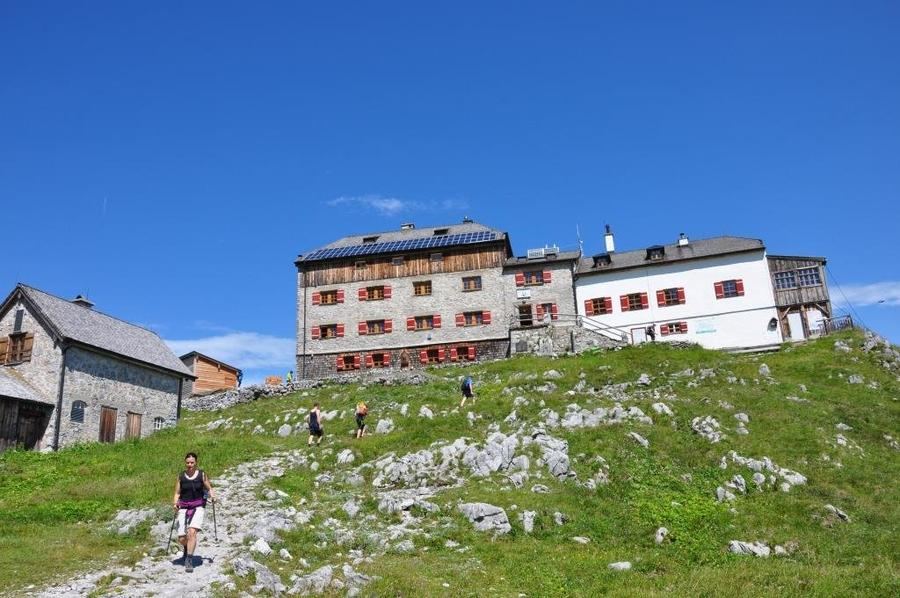
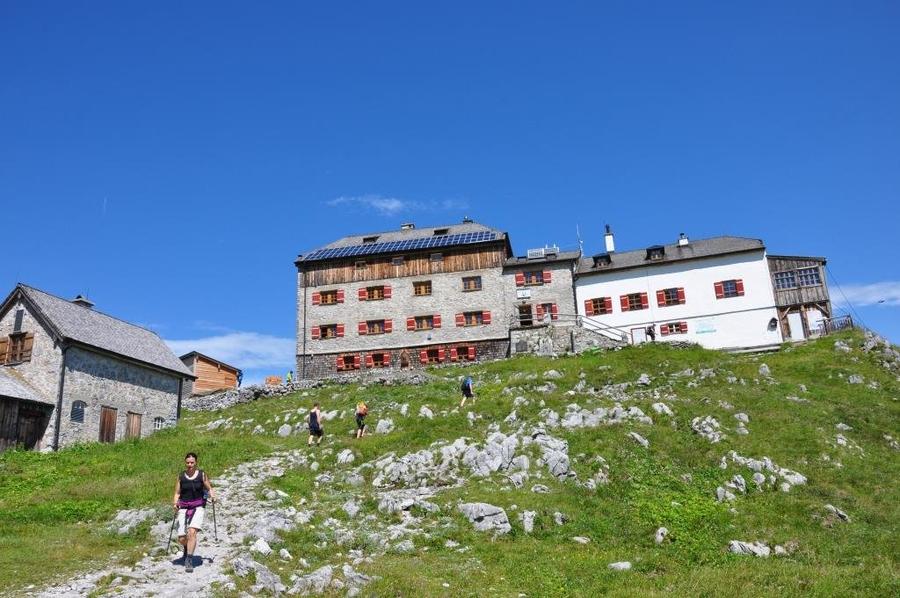
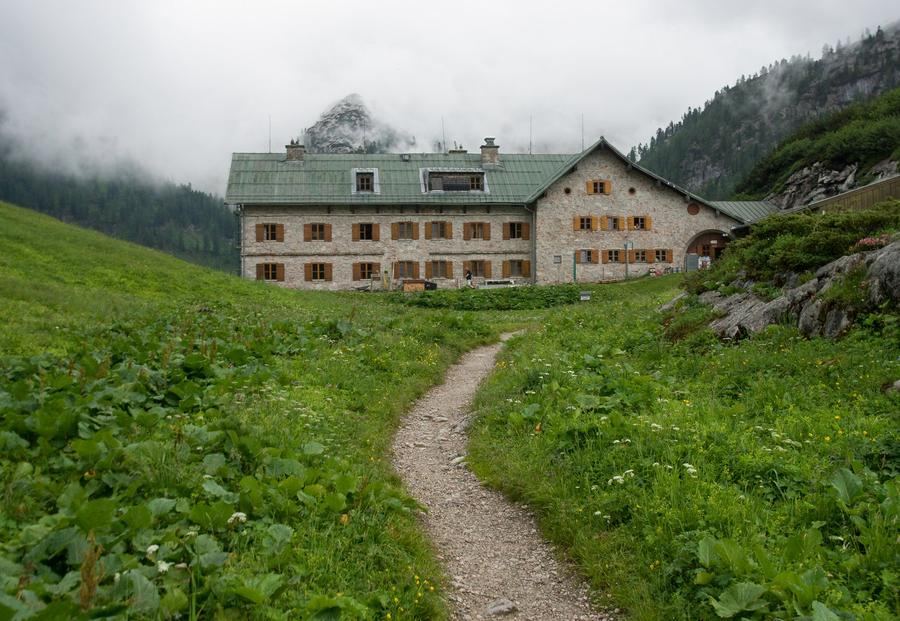
Day one pulls you from six hundred metres into alpine meadows to Watzmannhaus (1,930 m). Classic well-trodden climbing that works the calves but rewards you with a balcony directly beneath the famous Watzmann-Ostwand, a vertical cliff measuring 1,800 metres from lake to summit. It's the highest wall in the Eastern Alps. When you see it close for the first time, you understand why climbers pilgrimage to it.
Day two tips over Watzmann-Hocheck (2,651 m), the northern crest's highest, then drops into Wimbachgries. And here the mountains go mad. Wimbachgries is one of the largest scree streams in the Alps, a ten-kilometre river of crushed stone, sometimes three hundred metres wide, practically without vegetation and still slowly moving. You feel like you're on a desert sandwiched between Watzmann and Hochkalter. Night in cozy Wimbachgrieshütte (1,327 m), the circuit's lowest hut.
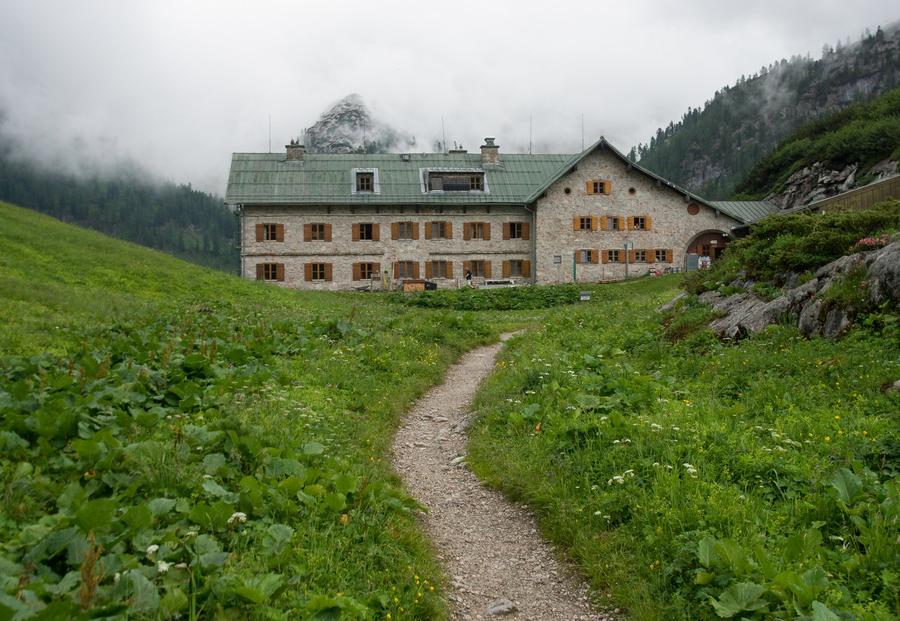
Day three is the king of stages. Over the saddle Trischübel and Hundstodsgatterl at the Austrian border you climb into the Steinernes Meer, a giant karstic plateau where rock looks like frozen waves. Goal for the day: Kärlingerhaus (1,631 m) above lake Funtensee. And this little lake holds a record nobody wants to experience firsthand, on December 24, 2001 they measured −45.9 °C here. Germany's lowest temperature ever recorded. The hut sits a few metres higher and is usually twenty degrees warmer than the surface below. Cold air drains into the stone bowl and stays trapped.
Day four is the descent home. Switchbacks of Saugasse, waterfall Schrainbachfall and then just lakeshore. At St. Bartholomä, a Baroque pilgrimage church with red onion domes, its floor plan winking at Salzburg cathedral, you board a quiet electric boat and glide back to Schönau. The circuit closes where it began.
Who's it for? For a capable hiker who can carry a multi-day pack and isn't scared of exposed ground. Difficulty is moderate, not technical climbing, there's no via ferrata on the route, but a few sections above the Steinernes Meer and in Saugasse need a sure step and a head for exposure. Season runs roughly June through September or October while huts are open and the plateau has no snow.
How to book? Watzmannhaus, Wimbachgrieshütte and Kärlingerhaus are Alpenverein huts. Secure beds in advance online through the booking system of the relevant section, especially weekends and high summer are full. Alpenverein membership gets you a discount on beds and better availability.
And one more thing: before heading out check trail conditions. The Berchtesgaden national park occasionally closes sections due to rockfall. The mountains here never stop moving. Ask Wimbachgries.
Pick a start date, for every night on the route you instantly see the free beds and book directly through the official Alpenverein system.



 AT
AT DE
DE CH
CH EN
EN FR
FR IT
IT NL
NL SL
SL SK
SK CZ
CZ