Five mountain ridges. Six valleys. Three countries. And one trail threading them all from Allgäu to South Tyrol.
This is the E5 — more precisely its most famous section from Oberstdorf to Meran. The E5 European long-distance trail runs over three thousand kilometres, but it's these 140 kilometres across the main Alpine ridge that made it a concept. When someone in Germany says "I'm walking across the Alps", they almost always mean this one. Six days, ten thousand metres of ascent — that's seven or eight times up Ben Nevis in your legs, only with a pack, no cable car and the border shifting twice on you.
Character? High-altitude, not a saunter. Scenic traverses, gorges, narrow ridges, passes over three thousand metres. Hard difficulty isn't marketing — it takes a sure foot, solid fitness and in the top section composure when the path drops into a glacier.
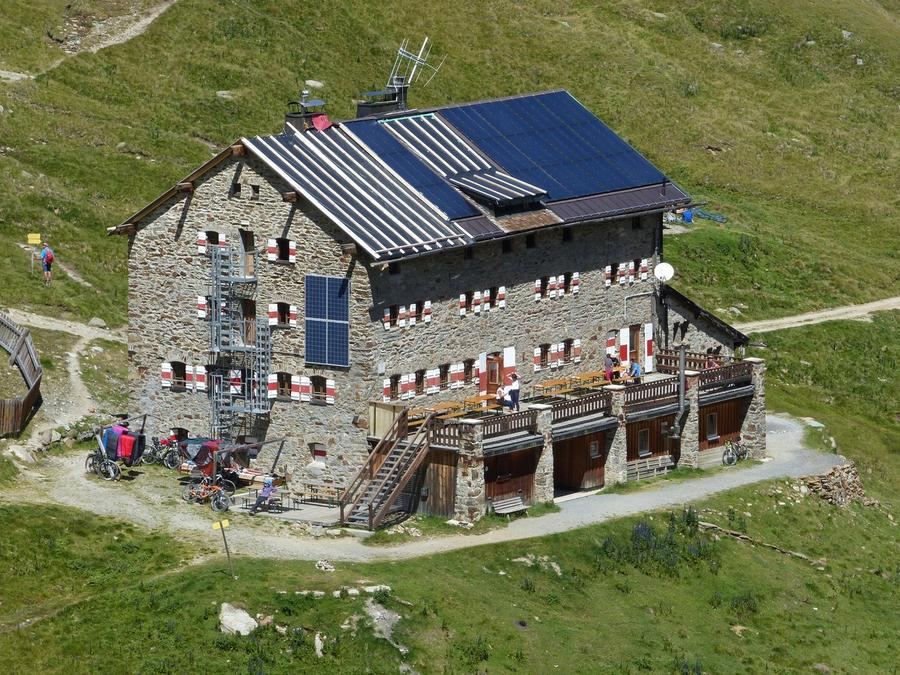
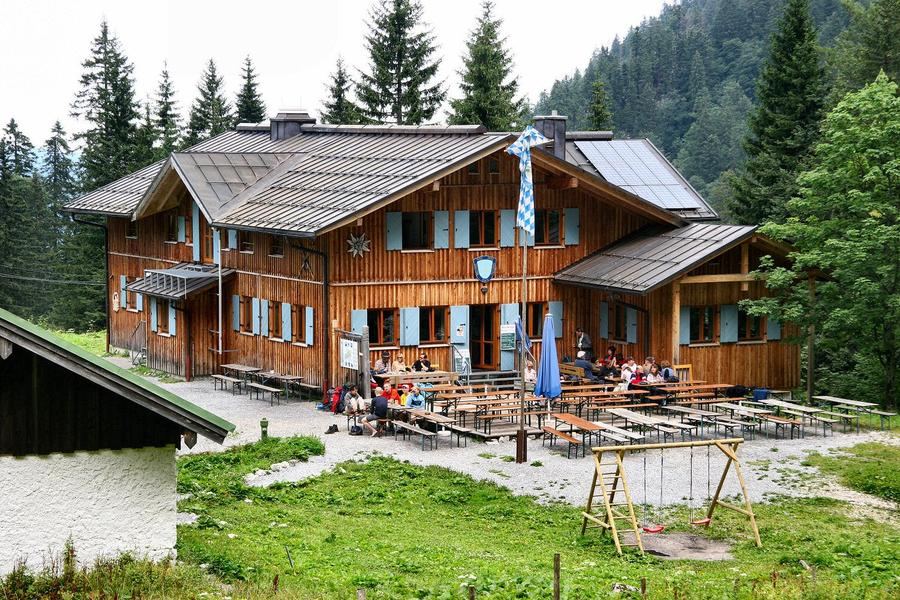
Start in Bavarian Oberstdorf. Right from day one you'll climb nine hundred metres to Kemptner Hütte (1844 m) and cross Mädelejoch into Austria — one pass, another country. Day two leads to Memminger Hütte (2242 m), the oldest hut on the entire E5, romantically wedged between peaks. Along the way you can detour to a suspension bridge at Holzgau in Lechtal, two hundred metres of steel hung over a gorge — either it thrills you or you study your boot tips.
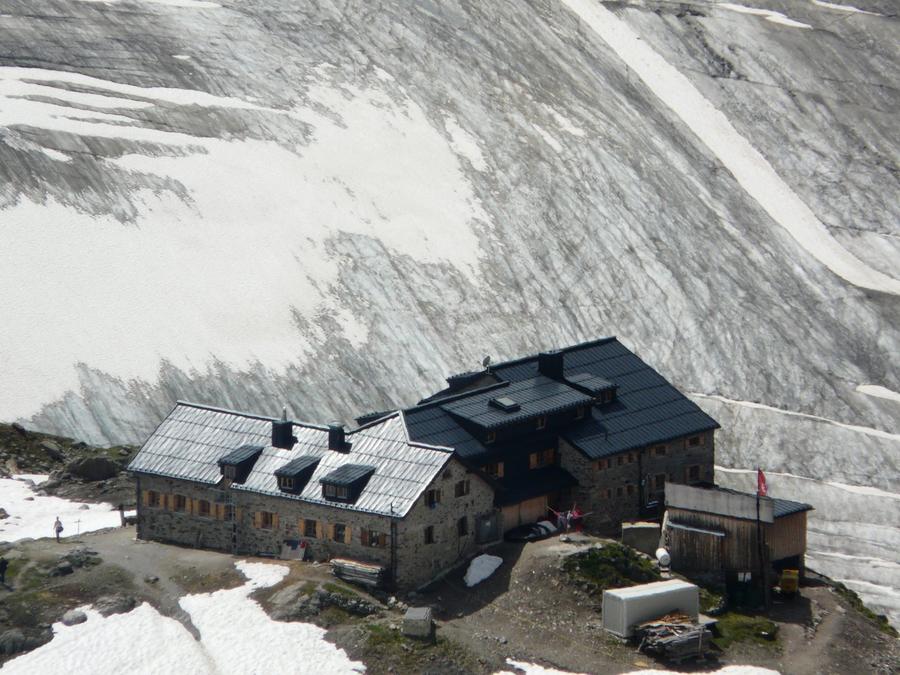
Day three you descend through Seescharte and the Venetus ridge down to Zams in the Inn valley — over two kilometres down in one day, your shins will remember. Day four is the opposite: from Mittelberg up to Braunschweiger Hütte (2758 m), perched on a cliff above Mittelbergferner glacier. Above it rises Wildspitze (3768 m), Austria's second-highest mountain. Here starts the real high-altitude poetry.
Day five is the crown. Traverse over Pitztaler Jöchl, around 2995 m — the route's highest point. Up there is ice, below is Ötztal, and looking back you see where you came from. You descend via Vent to Martin-Busch-Hütte (2501 m), an old hut once called Samoar-Hütte. From here it's a day's walk to Tisenjoch (3210 m) — where in 1991 the ice released Ötzi, a man from the Copper Age. The south side once had smugglers' paths into Italy across Timmelsjoch. You finish in Meran, among palms and vineyards of South Tyrol. From glacier to subtropical in one trek.
Who is it for? Experienced multi-day trekkers who want a classic hut-to-hut and don't fear heights or long descents. Not for a first mountain holiday. Anyone who can handle eight hours with a pack and keeps their head over glacier fields has found their Alps.
When? Mid-July to end of September. Earlier, old snow sits on passes; huts are still sleeping. Kemptner, Memminger, Braunschweiger and Martin-Busch all run roughly mid-June through end of September — always depending on weather and snow.
Booking is compulsory for this route, not optional. Alpenverein huts (DAV and ÖAV) fill weeks ahead in peak season. Book your bed in advance directly with each hut; Alpenverein membership cuts your night's cost and in emergency opens doors. No reservation on E5 means no guarantee of a bed.
Five ridges, three countries, two legs. The question isn't whether you'll make it — it's what stays in your head: the glacier beneath Wildspitze, the bridge above Holzgau, or the place where after five thousand years the ice let go and gave up Ötzi?
Pick a start date — for every night on the route you instantly see the free beds and book directly through the official Alpenverein system.




 AT
AT DE
DE CH
CH EN
EN FR
FR IT
IT NL
NL SL
SL SK
SK CZ
CZ